
Walking Through A Thousand Gates: A Soulful Visit to Fushimi Inari Taisha

Updated: May 13
Visiting shrines like the Fushimi Inari Taisha is what makes a trip to Japan so special!
Nowhere in the world will you have such a sublime spiritual experience presented as a tourist attraction with all the conveniences it brings along.
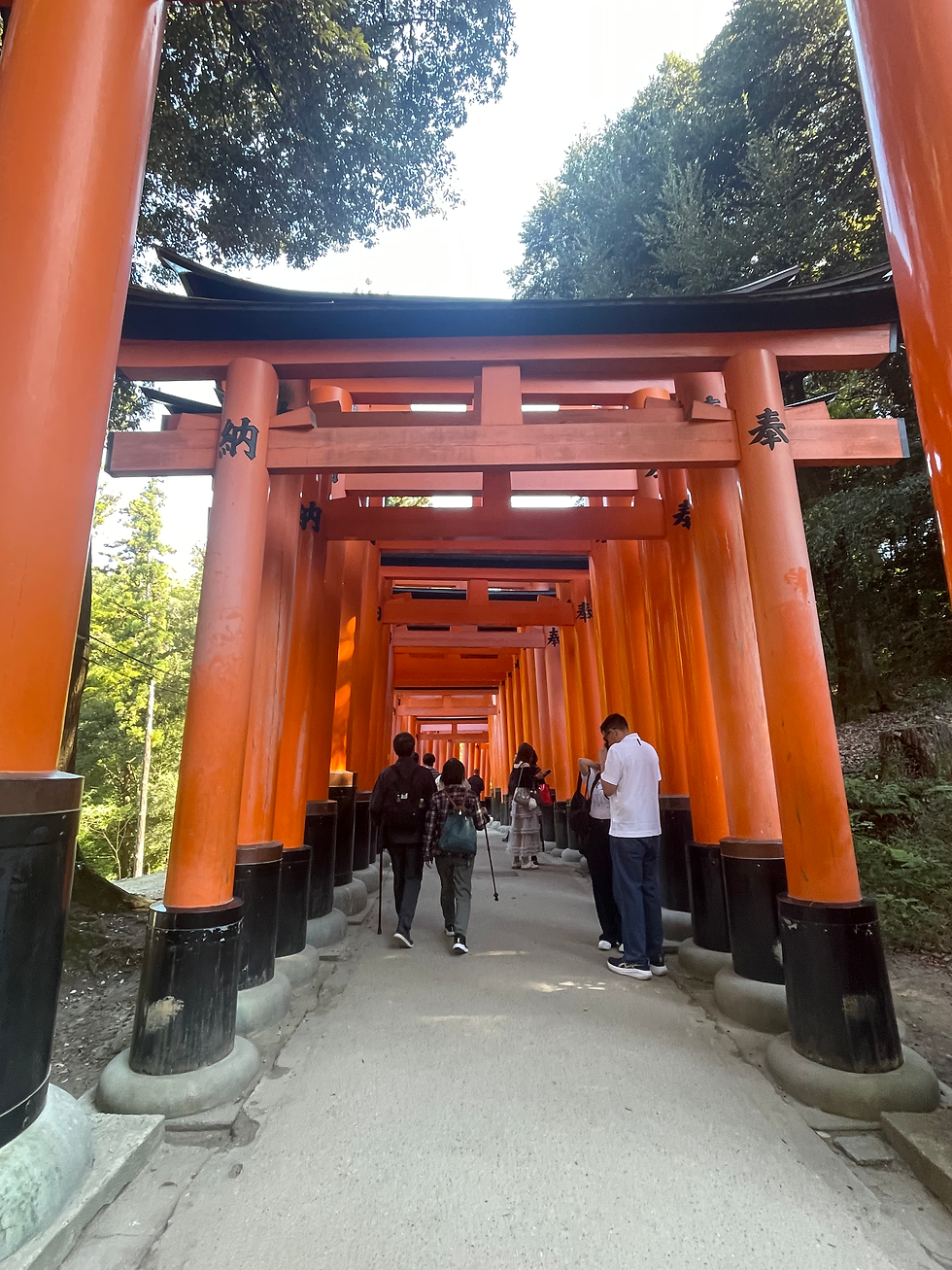
Over ten thousand bright vermilion-painted torii gates straddle both sides of the narrow mountain path leading up to Mount Inari. The gates create an orange tunnel, with the sun's rays filtering through the cracks in some places, lending this path an otherworldly charm!
The entire mountainous area of Fushimi Inari is dotted with many shrines and torii gates, and you will see hordes of tourists jostling their way up and down this narrow path.

About Fushimi Inari Taisha Shrine
Fushimi Inari is the head of all Inari shrines in Japan.
The presiding deity of the shrine is Inari Okami, the deity of prosperity, rice, agriculture and fertility and the harbinger of prosperous harvests and success. Throughout the grounds of Fushimi Inari, you will see stone fox statues, Kitsune, considered messengers of Okami.
These gates are painted in bright vermilion, believed to bring good fortune and dispel evil. They are gifts or donations to the shrine from businesses or individuals, with the donor's name inscribed on each gate. Passing through the gates signifies transition and movement from the mundane to the sacred, and these gates are conduits that pass the prayers to the deity.
As you keep walking up the path, the gates create dazzling illusions along the way...they become narrow at some points, then spread out to let in the sunlight and then narrow down again to form an orange tunnel till you reach the top of the mountain.



Fushimi Inari Taisha: Essential Visitor Information
Fushimi Inari is very well connected by train. We took the local train from JR Kyoto Station on the Nara Line Platform and got off at Inari Station. Finding our way to the Nara Line wasn't difficult; there were hordes of tourists walking that way. You can spot the shrine as soon as you step out of the Inari Station.
The best time to visit the shrine is early morning or late evening to beat the crowds. I would strongly recommend going early morning. We reached there at about 9 am, and it was already buzzing with tourists, a lot of them on their way back from the mountain top. I am quite sure the experience of seeing this shrine when the crowds are thin would be absolutely mesmerising and very peaceful.

Crowds get thicker as the day progresses Entrance to the shrine is free. Once you reach, you should straight hit the path leading to Mount Inari and not spend time at the other shrines that fall en route. You can see those shrines on your way back.
Keep aside at least 2 to 3 hours for this entire outing. It's a 2 km one-way walk. The slope is not too steep, but it certainly involves a lot of walking with thousands of steps. There are a lot of dirt paths along the way, too, with smaller shrines and very small torii gates in a picture-perfect ambience. We were slightly short on time, but ideally, one should laze around in this serene setting to soak in its calmness.

Smaller shrines and torii gates along the path The shrines at the base around the entrance are very crowded with people at all times. Keep walking to reach the Yotsutsuji Intersection Viewpoint. From there, you will have to walk another 30 minutes to the top. The higher you go, the thinner the crowds get, which adds to the allure of this serene shrine.
There's lots of walking involved, but the entire area is well-equipped with traditional cafes and food stalls. Toilets, like everywhere else in Japan, are clean and free.
So, spend a leisurely morning in this haven of beauty and tranquillity and come back refreshed in body and soul.
Our second attraction for the day was the UNESCO World Heritage Site of Kiyomizu-dera Temple. Coming up next!


Comments